
All results from the Euclid mission as well as a lot of reports, tests, and predictions are published as peer reviewed articles in scientific journals. The vast majority of almost 300 papers written by Euclid Consortium and ESA members so far were sent for publication in ‘Astronomy & Astrophysics’. Now an A&A ‘Special Issue’ collectively publishes 41 Euclid articles from last year’s data relase Q1.
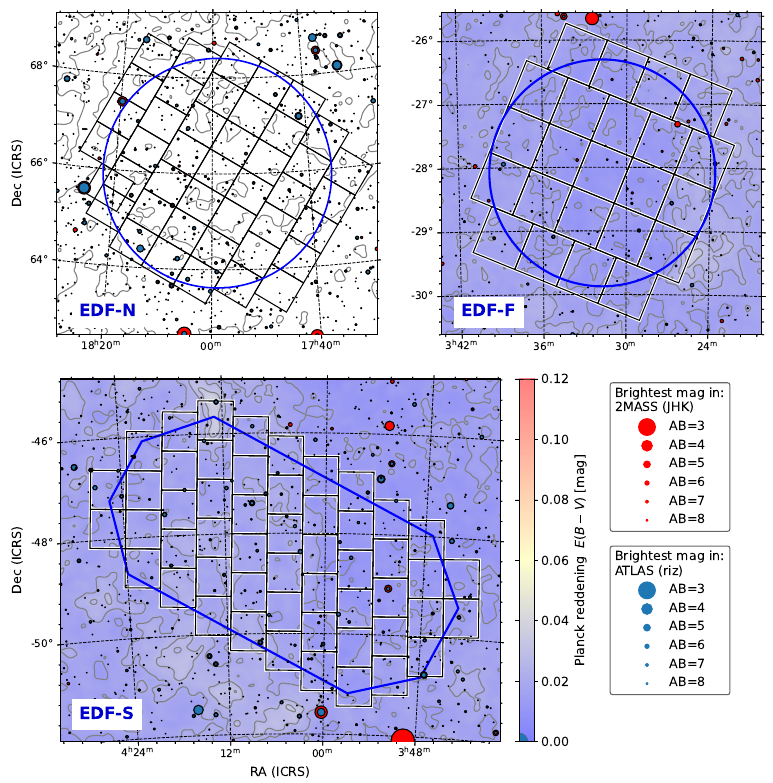
Euclid Q1 fields. The main data consists of a single pass over the Euclid Deep Field areas. Credit: EC: Aussel et al. (2026)
The Q1 data release was a first take of what Euclid’s main survey, the Euclid Wide Survey, would provide in the future. Images and spectroscopy for about 60 square degrees of the sky were released on 23 March 2025. A single pass over Euclid’s deep field areas, the same kind of data that in the end Euclid will produce over 13,000 square degrees, almost a third of the whole sky. The idea was to whet the astronomy community’s appetite and allow them to sharpen their analysis tools. 60 compared to 13,000 square degrees might not sound like much, but for high-quality space telescope data it’s huge: it’s a sizable fraction of the overall area the Hubble Space Telescope has observed over a time period of more than 30 years! The community needed this release to get a sense of the scale of data volume they should expect to work with very soon.
Accompanying the Q1 release were technical articles, to describe the data and processing, as well as a first suite of astrophysical analyses. All of these ‘papers’ – articles are still called this, despite most scientific journals are no longer printed and are appearing online-only – have already been accepted for publication and published as ‘pre-prints’ on the arXiv server between March 2025 and early 2026. But the publishing journal, A&A, was waiting to create a dedicated collection, a ‘special issue’ for Euclid’s Q1 data release description and result. Last year, on 30 April 2025, A&A had already published a first special issue ‘Euclid on Sky’, providing 16 papers on the Early Release Observations. A&A is one of the globally leading astrophysical journals, with a European base. The journal has published monthly issues since 1969, plus special issues in the past 25 years – this new special issue ‘Euclid Quick Data Release 1’ now contains 41 articles in A&A’s volume number 711.
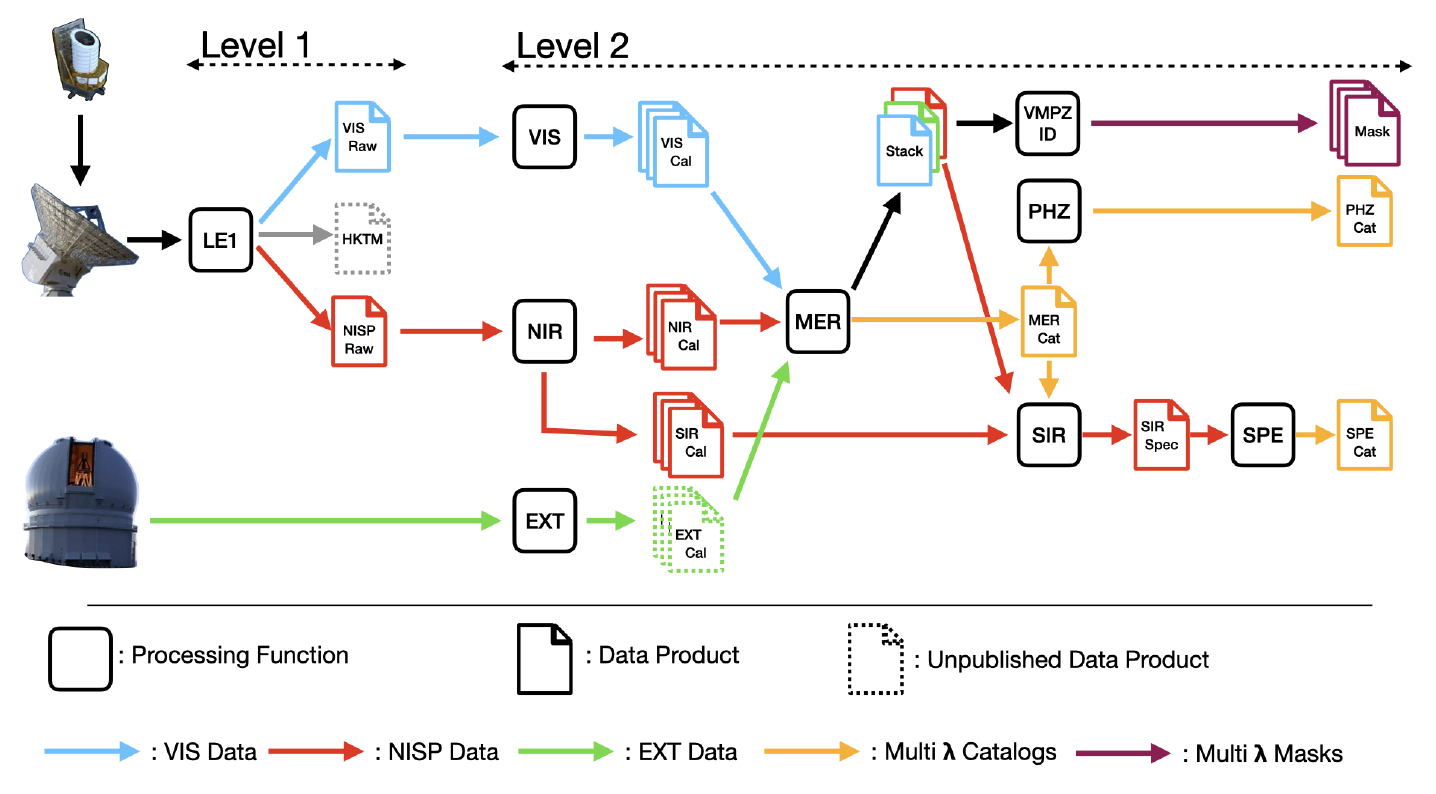
Part of the technical Q1 documentation: schematics of data flowing through Euclid’s processing from the telescope, to ground, and through the ‘Science Ground Segment’ to the science archive. Credit: EC: Aussel et al. (2026)
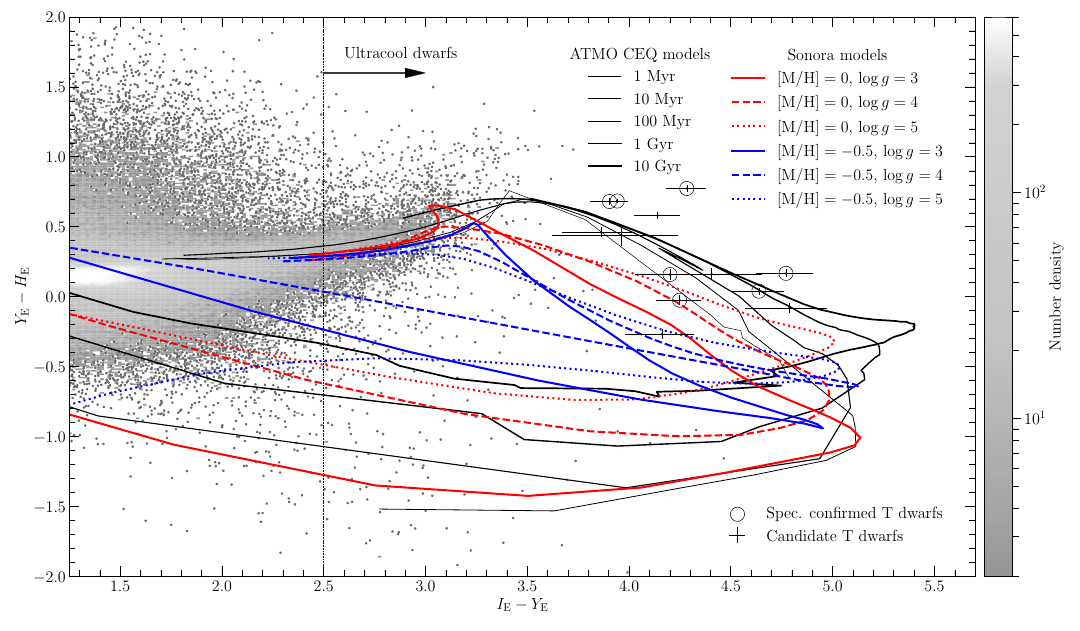
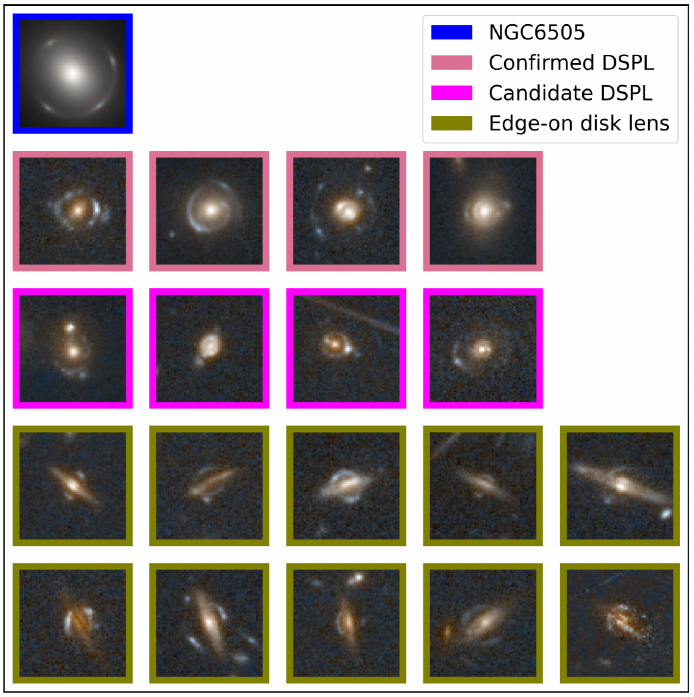
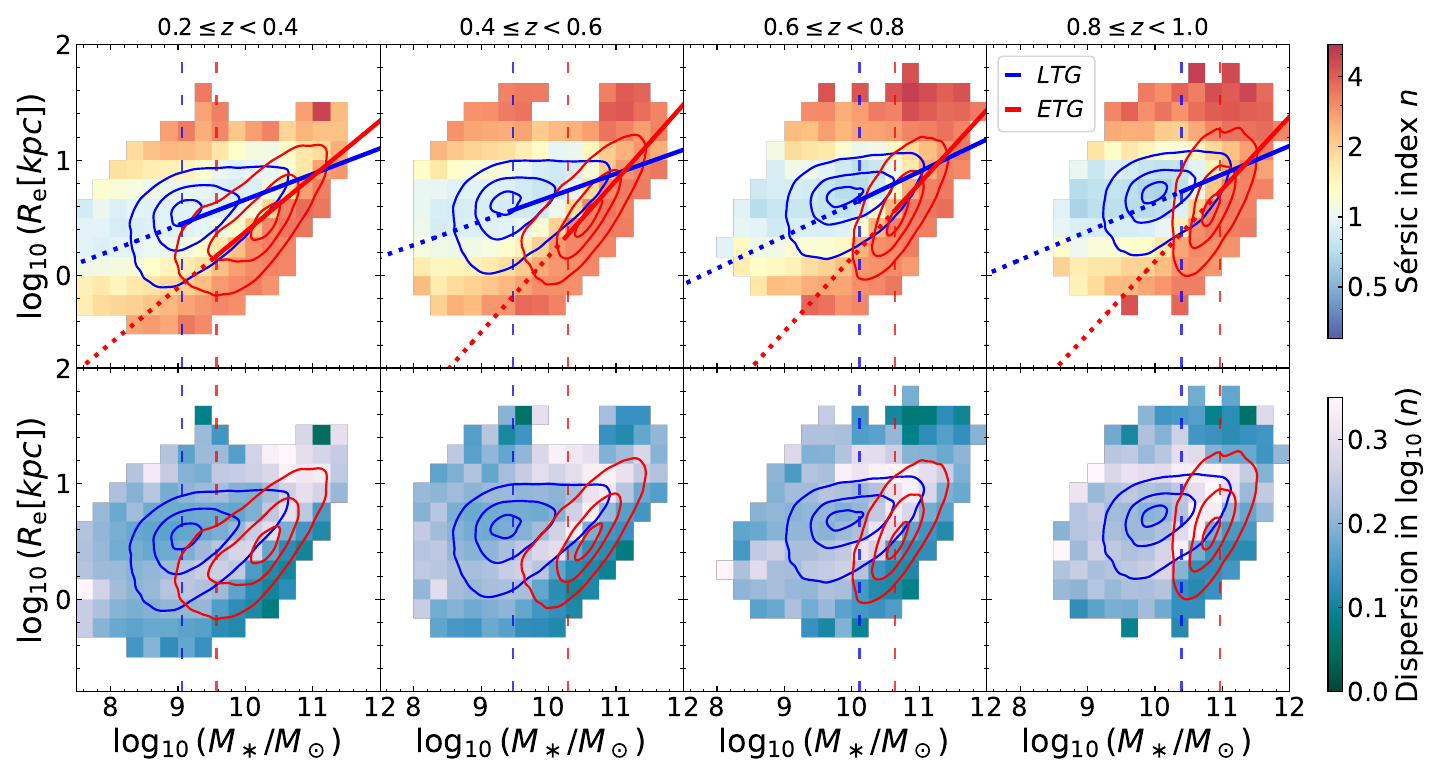
So what is contained in this special issue? First, seven technical papers describing the 63 deg² of the Q1 data release, the published data, and its processing from raw data to higher-level data products, as well as their calibration. Then 34 further articles with scientific results ranging from brown dwarfs to galaxy structure to gravitational lensing. Actually, since closing this special issue for production, several extra Q1 papers have been submitted and some already accepted for publication by A&A – the increasing full list of 50+ entries is available on our Q1 overview page.
Since releasing Q1 the Euclid Consortium and ESA already have moved on. Just recently a very different ‘Q2’ dataset was released, a deep look into the Milky Way’s bulge with the main aim to search for and find new exo-planets. And in fall 2026, part of Euclid’s first large data release, the ‘DR1-Foundation’ release will see 1900 deg² of calibrated images, spectra, and catalogues provided to the world together with another large batch of accompanying technical and science papers. As before, they will initially appear on arXiv and then in 2027 ‘printed’ in A&A.
We are happy that these 41 papers and their 860 pages are now offically ‘published’ – and they are available as ‘open science’, published without a paywall or required subscription. Read them all at A&A!


